

Arizona plumbing works under two very different kinds of stress, and altitude decides which one a home faces. Across the East Valley, the problem is mineral-heavy water moving through supply lines buried under slab foundations, many of them installed during decades of fast tract building. On the Mogollon Rim, in towns sitting above 6,000 feet, the problem is cold: months of freezing nights, exposed supply lines and older homes built over crawlspaces. Much of the advice homeowners pick up was written for neither climate, so many repair decisions here rest on assumptions that do not hold.
That split is why local experience matters, and it is the reason Under Pressure Plumbing keeps locations in both the East Valley and the White Mountains, serving communities from Mesa, Gilbert and Queen Creek up to Show Low, Pinetop-Lakeside and Snowflake. When aging pipes rust or start leaking, the team can replace only the failing runs or re-pipe the entire house with corrosion-proof materials, and the same crews handle leak detection, water heaters, drain cleaning and sewer backup prevention. Estimates cost nothing and someone is on call 24/7, so a split line on a January night or a hidden leak in July gets handled right away rather than after the weekend.
Copper lasts as long as the house
Copper earned its reputation, but “lifetime” depends on wall thickness and water chemistry, and both work against many valley homes. Production builders often chose the thinnest grade allowed for interior water lines, and that pipe is now old enough to show its limits.
Type M copper. The thinnest wall approved for indoor water supply, common in tract construction because it was cheaper per foot.
Type L copper. A thicker wall with more material to lose before a leak breaks through, often specified for underground and higher-demand runs.
Pitting corrosion. Localized attack that eats inward from the pipe’s inner surface until it opens a pinhole, driven by water chemistry, high flow velocity, leftover flux and poorly reamed joints.
In a slab home, a pinhole under the concrete rarely announces itself with a puddle. It shows up as a warm patch on the floor, a water meter that keeps spinning with every fixture off, or a bill that jumps for no obvious reason. Once one pinhole appears, more usually follow in the same system because the conditions that caused the first one are present everywhere the water flows. That is generally the point where repeated spot repairs start costing more than rerouting the lines.
Hard water only leaves spots on glass
Spotty glasses are the least of it. The USGS explanation of water hardness groups water by dissolved calcium and magnesium, and municipal supplies around Mesa, Chandler and Gilbert, which blend Salt River water, Colorado River water from the Central Arizona Project and local groundwater, routinely land in the hard to very hard bands. Those minerals stay dissolved until they are heated or left to evaporate, which is exactly what happens inside appliances.
Scale. The chalky calcium carbonate crust that bonds to heated surfaces and acts as insulation, making burners and elements work harder for the same hot water.
Sediment layer. Loose scale that settles at the bottom of a tank heater and produces the popping or rumbling sound many owners hear during heating cycles.
Anode rod. The sacrificial metal rod that protects a steel tank from rust and wears out faster when water chemistry is aggressive.
Tankless heaters are especially sensitive because their narrow heat exchangers clog quickly, and many manufacturers tie warranty coverage to water treatment or scheduled descaling in hard water areas. Shower cartridges, toilet fill valves and dishwasher inlet valves suffer too. The current trend in newer valley builds is a pre-plumbed softener loop at the main, and many existing homes are adding one along with a yearly flush of the water heater.
Arizona is too warm for frozen pipes
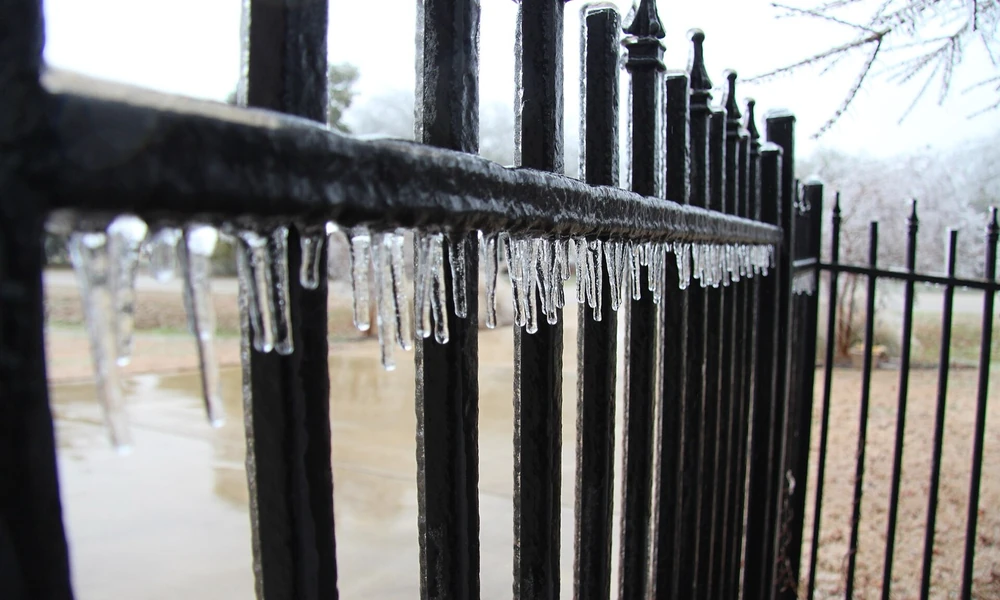
The desert image does not travel up the Rim. The City of Show Low lists an 18-inch frost line and enforces the 2018 International Plumbing Code in its published building codes and standards, which means water lines have to be buried below that depth and protected where they enter the house. The weak points are predictable: outdoor hose bibs, supply lines in exterior walls, ventilated crawlspaces, manufactured homes with gaps in their skirting and second homes in Pinetop-Lakeside or Greer left unheated between visits.
Copper splits when the water inside freezes solid. PEX can stretch and often survives a freeze, though brass fittings, valves and shutoffs remain the failure points. Even the valley gets the occasional hard freeze that cracks exposed irrigation backflow assemblies and the rooftop lines feeding evaporative coolers. Frost-free sillcocks, pipe insulation, heat cable on vulnerable runs and a set minimum thermostat setting for empty cabins prevent most of these calls. For a cabin closed for the season, shutting off the main and draining the lines is the safer choice.
A re-pipe means gutting the house
Modern re-piping is far less invasive than most owners expect. In slab homes, new lines usually run overhead through the attic and drop down inside walls to each fixture, while the old lines under the concrete are capped and abandoned. That avoids breaking up floors entirely. Access comes from small, planned drywall openings that get patched afterward, and a typical single-family home takes a few days, often with water restored each evening.
Attic routing in the valley needs care, since summer attic temperatures climb far above what most people imagine. Tubing rated for hot water service handles that heat, but it has to stay out of sunlight and should be insulated. Most East Valley cities require a plumbing permit for a re-pipe or a water heater replacement, with an inspection and a pressure test before walls close, while swapping a fixture in the same location generally does not need one. Material choice shapes how long the new system lasts, and the table below shows how the common options behave in local conditions.
| Material | Under very hard water | In a hard freeze | Where it fits today |
|---|---|---|---|
| Galvanized steel | Rusts and narrows from within as corrosion and scale build | Can split at threaded joints | Replace whenever found |
| Copper Type M | Prone to pinhole pitting in aggressive water | Splits when water freezes solid | Common in older tract homes |
| Copper Type L | Thicker wall buys more years | Splits when frozen | Used where metal is preferred or required |
| CPVC | Does not corrode but grows brittle with age and heat | Brittle in cold and can crack | Less common in new work |
| PEX-A | Does not pit or corrode; scale affects fittings more than tubing | Expands and often recovers; fittings remain weak | The usual choice for whole-house re-pipes |
Reading the signs in your own home
The most useful habit is simply paying attention to what the house already tells you. A water meter that moves with every tap closed, a heater that rumbles, white crust around aerators, recurring pinholes in the same run or a crawlspace that feels as cold as the outdoors all point to problems that grow more expensive the longer they wait. Knowing which climate your pipes live in, and which myths no longer apply, turns those signs into early, planned repairs rather than emergencies.
